
Cowboy Gear: Got Spurs?
Spurs, gut hooks, espuelas, hooks, galves, grappling-irons, can-openers, pet-makers, Chihuahuas, tin belly
Purpose: communicate with and guide your horse.
“Prick” tools were used by Roman, Celtic, and Greek riders. The early Spanish Colonial style spurs had large, sharp-ended rowels (rotating star-shaped wheels), often up to eight inches in diameter and usually put on the Conquistador’s boots by a servant after he was mounted in the saddle. Earlier spurs were in two pieces with the shank riveted into the heel band, while spurs today are one solid piece of metal.
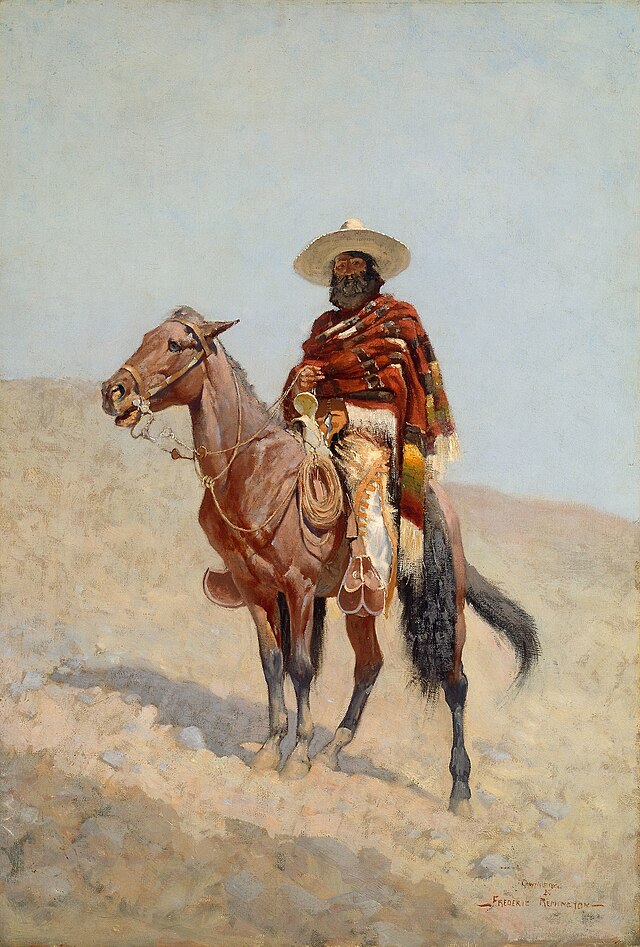
The vaquero by Frederic Remington
The early vaquero of Spanish held Mexico strapped spurs to the ankles of his bare feet or his shoes might be leather huaraches. Professional cowherders, from vaca, the Spanish word for cow. Almost five hundred years ago, the vaqueros were herding cattle on the Mexican plains and developing the tools and the techniques used by cowboys today. A cow’s way of thinking hasn’t changed.
The primary function of spurs was to have the ability to control your horse if you had to let go of the reins. Made of materials such as wood or bone, and later iron or bronze and decorated with silver, copper, and brass. Knights wore gold while the esquires wore silver. When an esquire was knighted, he was presented with a pair of gold spurs, thus coining the phrase, “earned his spurs.”
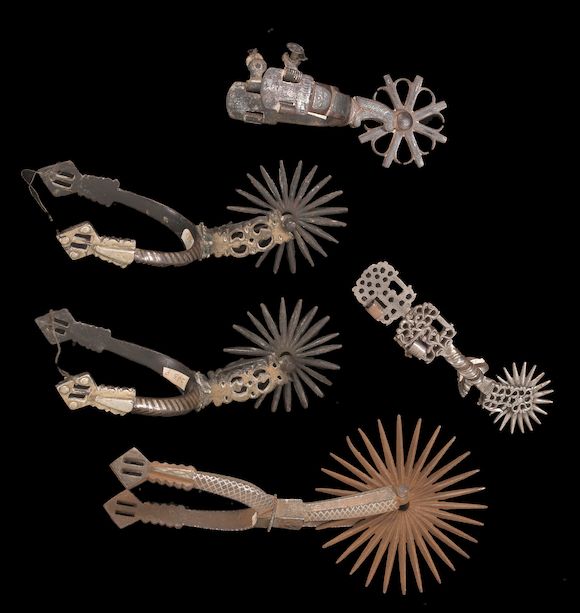
Heel bands were also called “yokes”, designed to sit on the hell of the boot. Heel chains were hooks under the instep.
Spur Straps, fastens over the ankles holding the spurs on the boot. Attached by two lower buttons. Can be narrow or wide, decorated with silver conchas. Other adornments include jinglebobs, or danglers, pear-shaped pendants which attach to the rowel pin on the outside of the shank and makes for a lively jingling sound when the cowboy walks. Making music is their only purpose.
Today’s silversmiths create spurs in a wide variety of custom, complex works of art with ornate, engraved silver or gold overlays in designs that range from functional to show pieces.
Photo Credits: Courtesy of Wikki Commons and N. Bright.
SUBSCRIBE NOW
Social Media


