
Arbuckle: The Original Cowboy Coffee
“The Coffee that Won the West”
Arbuckles. Six-shooter Coffee. Belly wash. Dishwater. Brown gargle. Black strap.
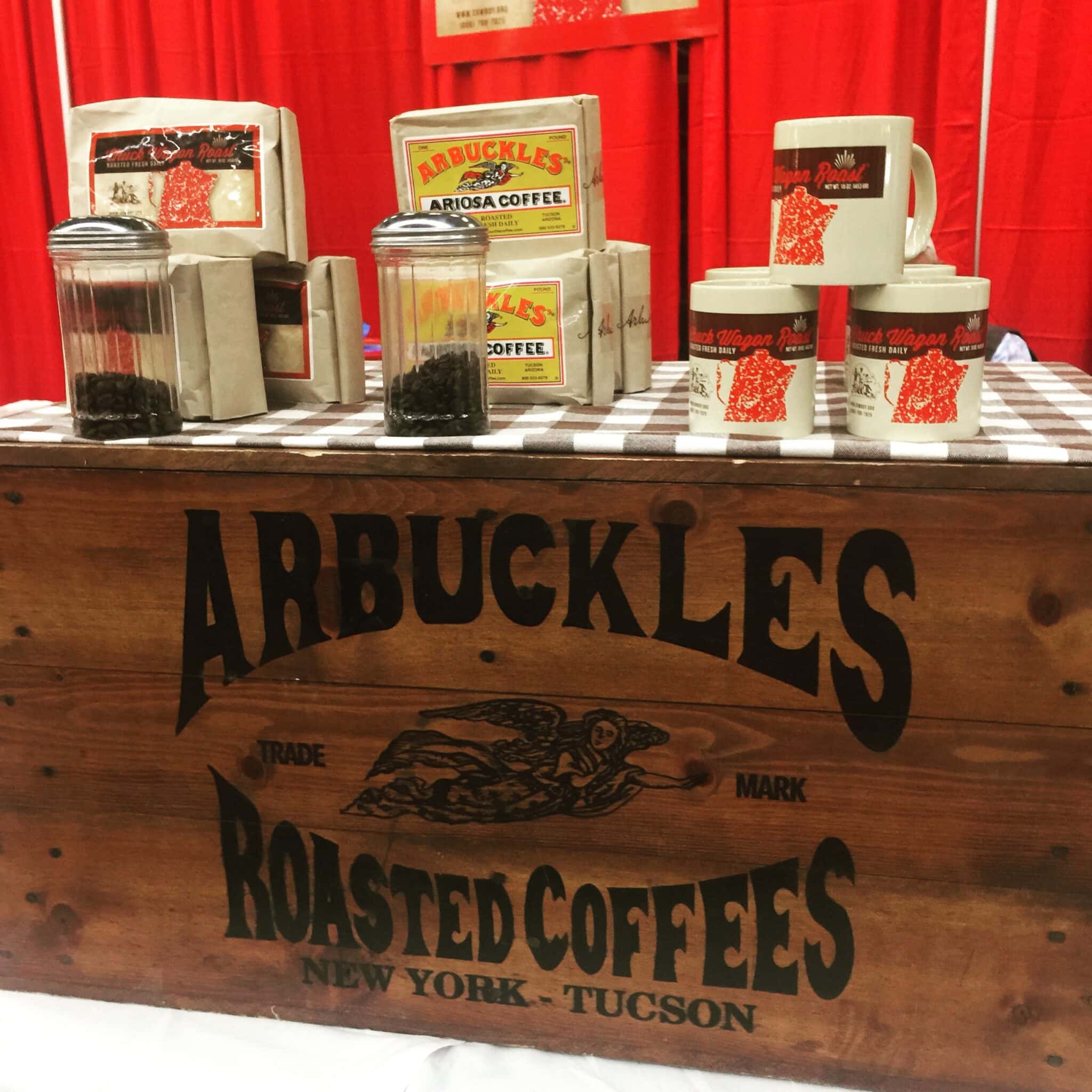
A coffee shop is more than just a place for refreshment. That smell and those coffee beans represent an important part of a trailing cowboy’s day in the American West. And that story starts long before the days of the cattle drives.
Essence of Old Shoes
Captain John Smith, founder of Jamestown, wrote of his travels through the Middle East and about the Turks. “Their best drink is coffa of a graine they call coava.” As far back as Boston 1670, Dorothy James was granted a license to sell “Coffee and cuchaletto”, as appearing in New England colony records. The British East India Company, in the promotion of tea, were creative in their reference of coffee, using terms such as “essence of old shoes.” Here came the Stamp Act of 1765 which taxed tea and American Patriots gathered at taverns where tea was renounced and coffee was served. Coffee became totally American, as an act of defiance against British taxes. I like about us; we always circumvent the obstacles and end up with something better. (Prohibition and NASCAR.)
Authentic Cowboy Coffee
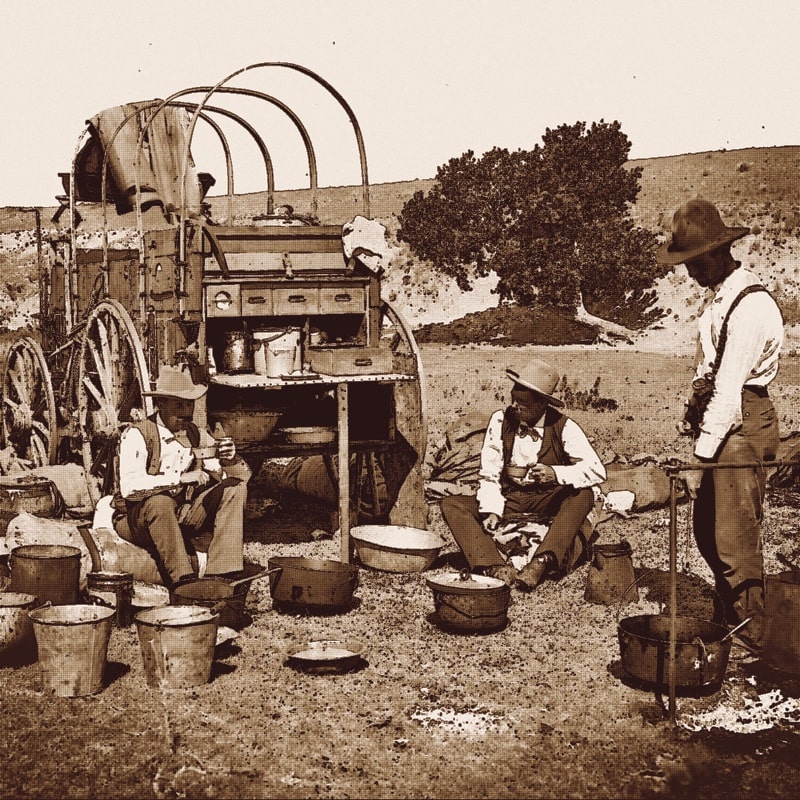
Authentic cowboy coffee was nicknamed “six-shooter coffee” because some of the chuck wagon cooks made it strong enough to float a six-shooter! A five-gallon, wide-bottomed pot sat on the fire from evening to early morning, to keep the night watch awake and the next morning, to shake the sleep from their brains. The stronger and blacker, the better.
1/2 cup ground coffee and 1 quart water, plus 1/2 cup
Pour grounds into a quart of water and bring to a boil. As it begins to boil, stir it down with a silver spoon or fork. Continue to boil for 10-12 minutes. Remove from fire. Add 1/2 cup cold water to settle the grounds, which will take about 5 minutes. Keep it warm but not boiling. Serve straight with a sourdough biscuit.
Enter the Arbuckle Brothers
The coffee drinking public became a curious dilemma to John and Charles Arbuckle some decades later; how to preserve the freshness of the coffee bean between roaster and coffee pot. Leaving Washington and Jefferson College in 1860, young John joined a brother and an uncle in the wholesale grocery business, where he developed many patents that revolutionized not just the coffee industry, but invented other innovative structures and machines.

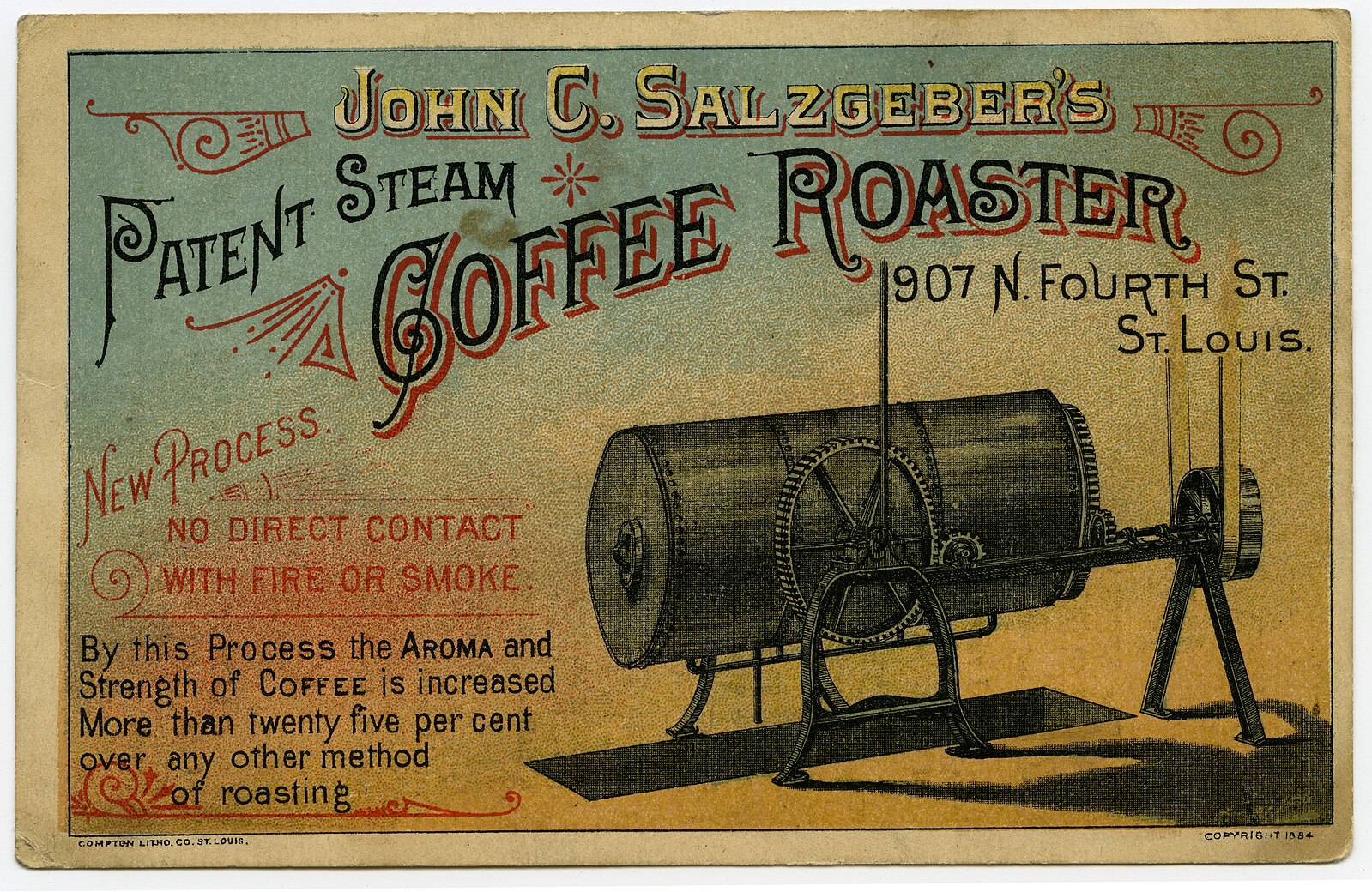
To enhance the flavor of a cup of coffee, roasting is key. During the roasting process, the green coffee beans take on quality and flavor, shrinking by one-fifth in weight, but roasted coffee is perishable. John Arbuckle developed a glaze, patented in 1868. The ingredients changed several times, eventually becoming a simple sugar and egg mixture.
Arbuckles brand, Ariosa, moved westward. A combination of java and mocha was jamoca. In the lumber camps you might hear “blackjack” or “blackstrap”. The freighters called it “black water”. Every chuck wagon had a coffee grinder securely bolted to its side. Cowboys on the range knew of no other brand. The cowman’s term, “plum barefooted,” was strong coffee that would “kick up in the middle and pack double.” “Six-shooter” coffee was strong enough to float a pistol. Weak coffee was called “dishwater”, “belly wash”, or “brown gargle”.
Whole beans were packed in one-pound packages, and there were 100 to every burlap sack. Every tightly packed pound-bag of Ariosa included a peppermint stick. Eager cow hands would volunteer to grind coffee in return for the candy. So shove out of your bedroll and pull on your boots. The fire’s going and the coffee is almost ready.
Bacon in the pan,
Coffee in the pot;
Get up an’ get it,
Get it while it’s hot.

For more information on cowboy camp coffee, watch this informative video by Cowboy Cook Kent Rollins on YouTube. Click here.
REF: ARBUCKLES. The Coffee that Won the West, by Francis Fugate. Texas Western Press, 1994. Photos from WikiMedia.
Natalie Bright is a blogger, author and speaker. For more recipes from the old west chuck wagon days and Kansas Cowtown, her award winning books KEEP ‘EM FULL AND KEEP ‘EM ROLLIN’ and END OF THE TRAIL EATS are available wherever fine books are sold. Click on the book tab above for more information about her books.

SUBSCRIBE NOW
Social Media


